

Email Marketing Campaigns That Actually Convert

Email marketing remains one of the most valuable digital marketing strategies for businesses that want to build relationships, generate leads, and increase sales. Unlike social media platforms, where businesses often depend heavily on changing algorithms, email allows brands to communicate directly with people who have chosen to hear from them.
However, simply sending emails does not guarantee results. A large mailing list means very little if subscribers are not opening messages, engaging with content, or taking action. Successful email marketing depends on delivering the right message to the right audience at the right time.
For entrepreneurs and growing businesses, the goal should not be to send more emails. Instead, the focus should be on creating better email marketing campaigns that provide genuine value and encourage meaningful action.
This guide explores practical email marketing strategies that can help businesses create campaigns that attract attention, build trust, and ultimately convert subscribers into customers.
What Makes an Email Marketing Campaign Successful?
A successful email marketing campaign is not built around one element alone. It requires a clearly defined audience, a strong subject line, valuable and relevant content, personalisation, a compelling call to action, good timing and a mobile-friendly design.
Consistency and performance tracking are equally important. When these elements work together, email becomes more than a communication channel. It becomes a reliable part of a broader marketing strategy that supports long-term business growth.
Start With a Clear Campaign Goal
Before creating an email, determine what you want the campaign to achieve. Your objective may be to generate leads, promote a product or service, increase sales, encourage repeat purchases, promote an event, educate subscribers, increase website traffic, or re-engage inactive customers.
The most important thing is to have one clear primary objective. A campaign with a focused purpose is easier for subscribers to understand and more likely to encourage action.
For example, an email designed to promote a new service should not overwhelm readers with several unrelated offers. The message should guide the reader naturally towards one main action.
Understand Your Audience
Effective email marketing starts with understanding your subscribers. Different customers have different needs, interests, and stages in their buying journey.
A new subscriber may need educational information to understand your business, while an existing customer may be ready for a product recommendation or special offer. Your campaigns should reflect these differences.
Consider information such as customer interests, previous purchases, website activity, location, business needs, engagement history, and where a person is in the buying journey. The better you understand your audience, the easier it becomes to create campaigns that feel relevant rather than generic.
Build a Quality Email List
A successful email marketing strategy depends on having a healthy subscriber list. Businesses should focus on attracting people who genuinely want to receive their content rather than purchasing random email lists.
You can grow your list through website sign-up forms, newsletter subscriptions, valuable downloadable resources, free guides, webinars, educational content, product updates, and relevant special offers.
Quality matters more than quantity. A smaller audience that actively engages with your emails can be far more valuable than a large list of inactive subscribers.
Write Subject Lines That Encourage Opens
The subject line is one of the first things subscribers see, so it plays an important role in encouraging people to open an email. A strong subject line should communicate value while creating enough interest to make the reader want to learn more.
For example:
Discover Simple Ways to Improve Your Website
Your Guide to Smarter Business Automation
Three Ways to Save Time With AI
Ready to Improve Your Digital Strategy?
Avoid misleading subject lines or excessive use of capital letters. A temporary increase in open rates is not worth damaging the trust you have built with your audience.
Personalise and Segment Your Emails
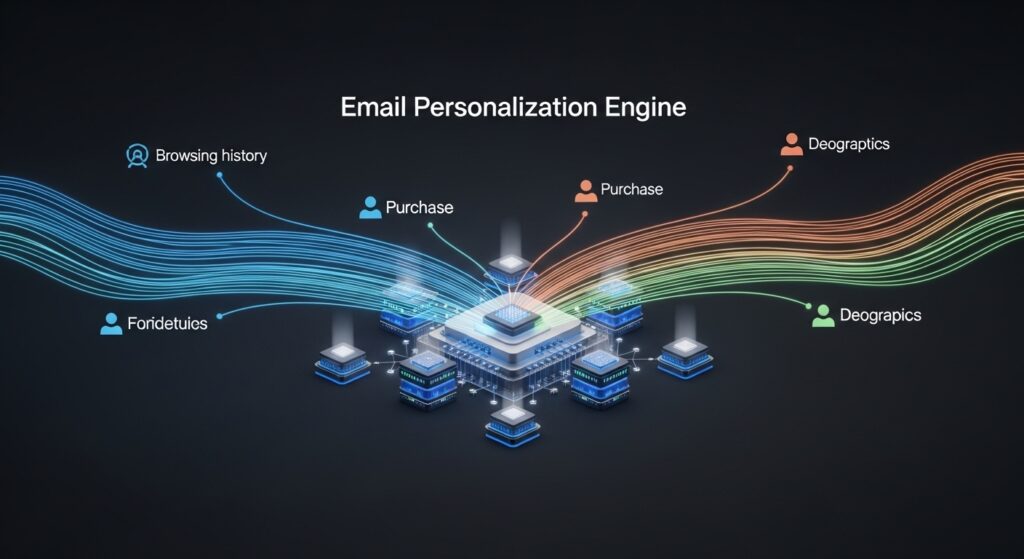
Personalisation can make email communication feel more relevant. Instead of sending exactly the same message to every subscriber, businesses can use available customer information to create more targeted experiences.
This may include using a subscriber’s name, recommending relevant products, referring to previous purchases, sharing content based on interests or adjusting messages according to customer behaviour.
Segmentation supports this approach by allowing businesses to send different messages to different groups. For example, an online business might communicate differently with new subscribers, existing customers, repeat customers and inactive subscribers.
A software company may segment its audience according to business size, product usage or industry. By doing this, subscribers receive content that better matches their individual needs.
However, effective personalisation should always feel useful rather than intrusive.
Focus on Providing Value
People do not subscribe to business emails simply because they want to receive advertisements. They expect something useful in return.
Your emails can provide value through educational tips, industry insights, helpful resources, product guidance, case studies, tutorials, exclusive offers and relevant updates.
A business that consistently provides useful information is more likely to build strong, long-term relationships with its subscribers. Not every email needs to sell something. Sometimes the best way to encourage future conversions is to help your audience first.
Create Clear and Compelling Email Content
Good email content should be clear, concise, and easy to understand. Avoid filling your emails with unnecessary information. Instead, focus on the main message and guide the reader through it naturally.
A simple structure can begin by introducing a topic or problem. You can then explain the value or benefit to the reader before presenting a relevant product, service, idea, or resource as the solution. Finally, provide a clear call to action that tells the reader what to do next.
This structure keeps your campaign focused and makes it easier for subscribers to take action.
Use Strong Calls to Action
A call to action tells readers what you want them to do after reading your email. It could encourage them to shop, book a consultation, download a guide, start learning, explore a service or read a full article.
The most effective call to action is clear, specific and relevant to the purpose of the email.
Avoid using too many competing calls to action. If everything appears equally important, readers may not know which action to take. A focused campaign should generally lead subscribers towards one primary next step.
Make Your Emails Mobile-Friendly
Many people read emails on smartphones and tablets, so your campaigns should work well across different screen sizes.
Use readable text, short paragraphs, clear buttons, simple layouts and appropriate images. There should also be enough spacing to make the email comfortable to read and easy to navigate.
A subscriber should not have to zoom in or struggle to click a button. A mobile-friendly design improves the overall experience and makes it easier for readers to respond to your message.
Choose the Right Timing
Timing can influence how people interact with emails. However, there is no single perfect time that works for every business.
The ideal sending time depends on your audience, industry, location and customer behaviour. Rather than relying entirely on general recommendations, test different sending times and review your campaign results.
Over time, you may discover that your audience responds better to emails sent on particular days or at specific times. Let your own campaign data guide your decisions.
Use Automated Email Sequences
Email automation can help businesses communicate with subscribers at important moments without having to send every message manually.
Automated campaigns can include welcome emails, new subscriber sequences, abandoned cart reminders, product recommendations, customer onboarding, event reminders, follow-up messages and re-engagement campaigns.
Automation saves time while helping businesses maintain consistent communication. It also allows subscribers to receive relevant information based on their actions or stage in the customer journey.
Create Effective Welcome Emails
A welcome email is often one of the first direct interactions between a brand and a new subscriber. This is an opportunity to introduce your business, explain what subscribers can expect and provide immediate value.
A strong welcome sequence can include educational content, useful resources, information about your brand and a relevant offer. The goal should be to establish trust rather than immediately push for a sale.
Build Trust Through Email Marketing
Conversion is important, but long-term trust is even more valuable. Businesses should avoid sending misleading messages, excessive promotions or irrelevant content.
Be transparent about why subscribers are receiving your emails, the type of content they can expect and how frequently they will hear from you. Make it easy for people to unsubscribe if they no longer want to receive your messages.
Respecting subscribers creates a healthier relationship with your audience and can improve the long-term performance of your email marketing.
Test and Improve Your Campaigns
Email marketing should be treated as an ongoing learning process. You can test different subject lines, email designs, calls to action, content lengths, images, offers, and sending times.
The key is to learn what works best for your specific audience. Instead of assuming that one approach will always work, use campaign data to improve future emails.
Testing can help you understand what encourages subscribers to open, click, and convert, allowing you to make better decisions over time.
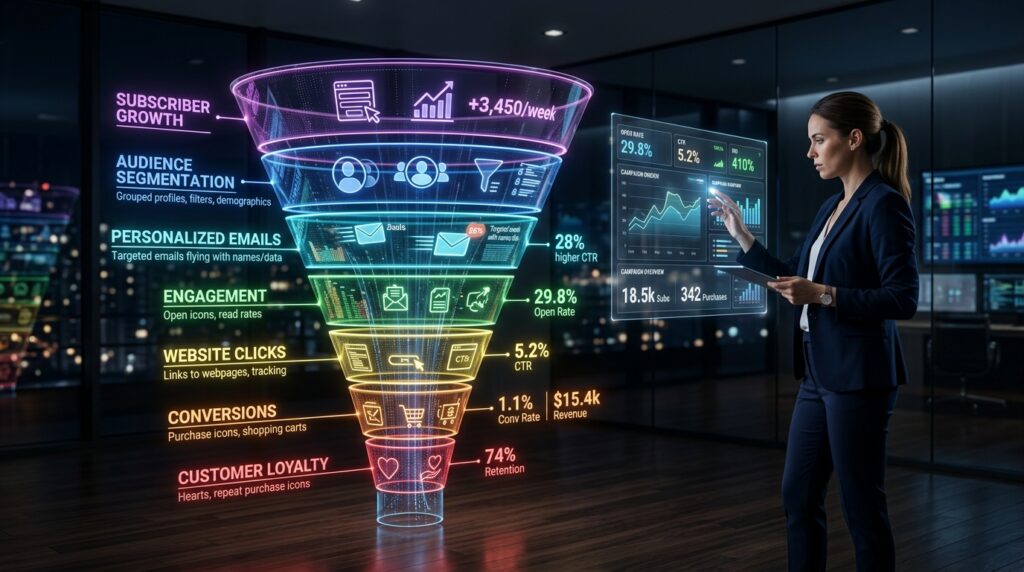
Track Important Email Marketing Metrics
Measuring performance helps businesses understand whether their campaigns are achieving the desired results.
Open rate can help you understand how many recipients opened your email, while click-through rate shows how many people clicked a link or call to action.
Conversion rate measures how many recipients completed the desired action, such as making a purchase or booking a consultation. Unsubscribe rate can help you understand whether subscribers are losing interest in your emails.
For sales campaigns, revenue can also help determine the financial value generated by the campaign.
It is important to look at several metrics together rather than relying on a single number. For example, a campaign may receive many opens, but very few conversions, which could indicate that the subject line is effective but the email content or call to action needs improvement.
Avoid Common Email Marketing Mistakes
Several common mistakes can reduce the effectiveness of an email campaign. Sending too frequently may cause subscribers to disengage, while unclear subject lines can give readers little reason to open the message.
Making every email a sales pitch can also reduce trust and engagement. Similarly, ignoring mobile users can make campaigns difficult to read, while continuing to send messages to inactive subscribers indefinitely can affect the overall health of your email list.
Another common mistake is forgetting to include a clear call to action. If readers do not know what to do next, the opportunity to convert them may be lost.
Create Campaigns Around the Customer Journey
Email marketing becomes more effective when campaigns reflect where customers are in their journey.
A new subscriber might receive educational content that introduces them to your business. An interested prospect may receive case studies, product information or resources that help them make a decision. A new customer might receive onboarding information, while an existing customer could receive relevant recommendations or loyalty offers.
This approach creates a more natural communication experience because subscribers receive information that is more appropriate to their relationship with your business.
Conclusion
Email marketing campaigns that actually convert are built on relevance, value, trust and consistency. Businesses should focus on understanding their audience rather than simply increasing the number of emails they send.
Strong subject lines, audience segmentation, personalisation, valuable content, clear calls to action, mobile-friendly design, automation and performance tracking can all contribute to better campaign results.
Most importantly, successful email marketing is not about repeatedly sending promotional messages. It is about building a relationship with subscribers and giving them useful reasons to continue engaging with your brand.
For entrepreneurs and growing businesses, a well-planned email marketing strategy can become a powerful channel for generating leads, nurturing customers, increasing sales and supporting long-term business growth. Start with one clear campaign goal, understand your audience, measure the results and continuously improve your approach.





Responses